
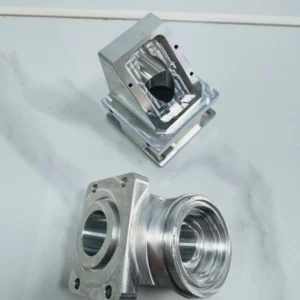
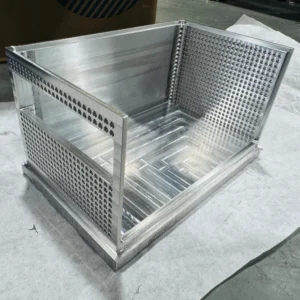
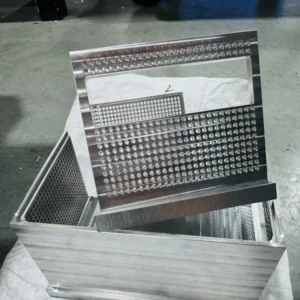
Corner radii, deep pockets, thin walls and tool access can influence machining time, stability and inspection.
 |
 |
 |
 |
Internal corners need tool access
A standard milling cutter leaves a radius at an internal corner. If the design requires a sharp internal corner, another process or a design change may be needed. Choosing a practical radius can simplify tool selection and reduce extra operations.
Deep pockets and thin walls need planning
Deep narrow cavities may require long tools, which can increase deflection and vibration. Thin walls can flex under cutting forces or clamping pressure. Where possible, review pocket depth, wall thickness, support features and the required finish together.
Design for inspection, too
A feature that is difficult to reach with a cutting tool may also be difficult to measure. Consider whether critical holes, slots and datums can be accessed by practical inspection equipment.
Standard features are often easier to make
Standard hole sizes, thread specifications and practical corner radii can allow the shop to use common tools. This does not mean every design must be simplified at the expense of function. Instead, compare each special feature with its purpose: if a non-standard size or a sharp internal corner is essential, retain it and make the requirement clear. If it is not functionally necessary, a small design adjustment may make the part easier to produce.
Think about how the part will be held
A feature may be easy to model but difficult to hold securely during cutting. Small parts, thin sections and irregular shapes can require dedicated fixtures or additional setups. Consider adding usable datum surfaces or temporary holding features where the product design allows it. For multi-face components, discuss which faces need to be machined in relation to one another so the setup plan can preserve the required alignment.
Design for chip removal and inspection access
Deep pockets and blind holes can trap chips or coolant, depending on their shape and orientation. Narrow features can limit tool access and make deburring difficult. Inspection access matters too: a dimension that cannot be reached with a practical measuring tool may need a different datum strategy or a clarified inspection method. A short DFM review before release can expose these issues while changes are still inexpensive.
 English
 Chinese