
The right information helps machining suppliers review manufacturability, compare options and ask fewer rounds of clarification questions.
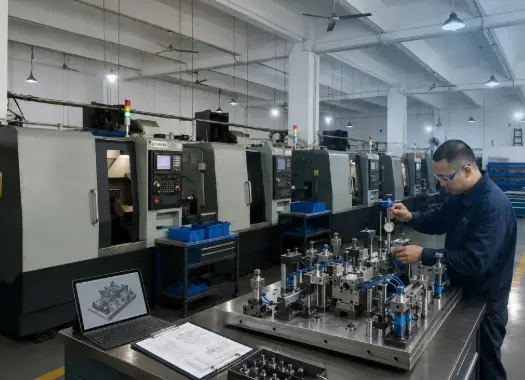
A 3D model is useful—but not always enough
A 3D model communicates shape, but a 2D drawing often carries the tolerances, datums, thread callouts, surface texture and inspection notes that define acceptance. Keep the model and drawing at the same revision.
Mark what is functionally critical
Not every dimension has the same impact. Identify critical fit dimensions, bearing seats, hole patterns, sealing surfaces or alignment features where variation could affect assembly. Avoid applying unnecessarily tight tolerances to every dimension.
Include purchasing details
Material grade, quantity tiers, finish, packaging, inspection documents and delivery expectations all influence the quotation. When details are still open, list them as questions rather than leaving suppliers to guess.
What a useful drawing package contains
A 2D drawing communicates dimensions, tolerances, datums, threads and notes that may not be obvious from a 3D model alone. A 3D CAD file helps the manufacturer understand overall geometry and tool access. When available, provide both and make sure they represent the same revision. Also include material grade, quantity, surface finish, coating or heat-treatment requirements, and any packaging or traceability needs.
Mark critical features instead of marking everything critical
If every dimension is assigned a very tight tolerance, quotation and inspection become more complicated, and the cost may rise without improving the part’s function. Identify the dimensions that affect assembly, movement, sealing or load transfer. For other features, use tolerances suitable for their purpose and the applicable drawing standard. This gives the manufacturing team a clearer basis for process planning and inspection.
Revision control prevents avoidable confusion
A drawing update after quotation can affect material, programming, fixtures, machining time and inspection. Use clear revision identifiers and state which files are approved for production. If a requirement changes, communicate it in writing and confirm the impact before work continues. This is especially important when several parts belong to one assembly or when repeat orders must match an earlier approved version.
 English
 Chinese